
Digitális Külpolitika Kutatócsoport
A kutatóközpont neve angolul
Digital Foreign Policy Research Group
The purpose of the research center
Objectives of the research group:
The proliferation of digital technologies and the internet has fundamentally transformed the structure and functioning of international relations. While the actors of the physical sphere remain central, digital platforms, the information environment of social media, and artificial intelligence are playing an increasingly important role in shaping foreign policy. The digital space has therefore evolved beyond mere technological infrastructure into an independent dimension of international relations, in which effective digital foreign policy has become a key factor in strategic interest promotion, security policy, and international competitiveness.
These trends suggest that the significance of this research field will continue to grow. One of its main drivers is the expanding role of artificial intelligence in public policy, which is expected to reach the foreign affairs sector as well: outcome prediction, decision support, and the planning, implementation, and evaluation of foreign policy will likely rely on intelligent technologies. Research in digital foreign affairs will therefore become indispensable in the long term, not only from a scientific perspective, but also from a practical and strategic one.
Our research group understands digital foreign affairs as a concept with a dual meaning. On the one hand, it refers to the theoretical exploration and empirical examination of how foreign policy actors operate in the digital sphere: how states shape their international interests and foreign policy online, how they construct narratives about themselves, how they adapt to the logic of social media, and how they seek to influence both domestic and foreign publics. On the other hand, digital foreign affairs also encompasses the evidence-based analysis of traditional foreign policy processes through modern digital tools, including data analytics, network science, and artificial intelligence. This dual approach connects the offline and online dimensions while drawing on large, structured, and comparable datasets to produce factual findings about the online activity, relational networks, and communication patterns of foreign policy actors.
In terms of geographical focus, our research group currently concentrates primarily on the eastern flank of the European Union and NATO, with particular attention to the small states located along the north-south axis, in the zone stretching from Finland to Greece. Examining the digital foreign policy practices and patterns of this region enables us to better understand the strategies and challenges faced by states in geopolitically sensitive positions in both online and offline spaces.
Our long-term goal is to become a leading domestic research hub and an internationally recognized center in the study of digital foreign affairs and digital diplomacy. To this end, we actively expand the academic literature, participate in international conferences, organize academic forums, build professional and institutional partnerships, and pursue domestic and international research grants. Leveraging the potentials in this field and building on interdisciplinary collaborations, we also plan to develop digital tools and applications that support foreign policy data analysis, decision-making, and the evaluation of digital diplomatic presence, contributing thereby not only to academic research but to applied research and technological development as well.
Head of Research Center
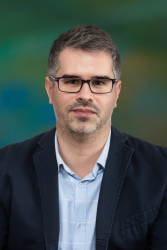
University or personal website of the head of the research center, MTMT website, doktori.hu website
https://btk.pte.hu/hu/munkatarsak/dr-kacziba-peter-phd
Members of the research center
A kutatóközpont tagjai:
-
Dr. Lechner Zoltán, PhD, egyetemi adjunktus, PTE BTK, Társadalmi Kapcsolatok Intézete, Politikatudományi és Nemzetközi Tanulmányok Tanszék
Publikációk: MTMT
-
Dr. Szegedi Péter, PhD, egyetemi adjunktus, PTE BTK, Társadalmi Kapcsolatok Intézete, Politikatudományi és Nemzetközi Tanulmányok Tanszék
Publikációk: MTMT
-
Tóth Lili, PhD hallgató, kutatás segítő munkatárs, PTE BTK, Társadalmi Kapcsolatok Intézete, Politikatudományi és Nemzetközi Tanulmányok Tanszék
Publikációk: MTMT
-
Dr. Urbanovics Anna, PhD, tudományos munkatárs, PTE BTK, Társadalmi Kapcsolatok Intézete, Politikatudományi és Nemzetközi Tanulmányok Tanszék:
Publikációk: MTMT
The most significant publications of the research center
Jelenleg futó kutatások:
Mesterséges intelligenciával támogatott döntéshozatal a külpolitikában: Megvalósíthatósági lehetőségek európai kisállamokban (Futamidő: 2026-2029, támogató: NKFIH Advanced 2025, tagok: Kacziba Péter, Lechner Zoltán, Szegedi Péter, Tóth Lili, Urbanovics Anna).
Versengő külpolitikai stratégiák az EU keleti szárnyán az orosz-ukrán háború kitörése előtt és után (Futamidő: 2025-2026, támogató: Pécsi Tudományegyetem, tagok: Kacziba Péter, Lechner Zoltán).
Kapcsolat: dfp@pte.hu
Contact
+36 72 503 600/ 64127 or 64126
Pécsi Tudományegyetem | Kancellária | Informatikai és Innovációs Igazgatóság | Portál csoport - 2020.