
Life Course and Social Context Research Group
Name of the research group in Hungarian
Életút és Társadalmi Kontextus Kutatócsoport
The purpose of the research center
The research group focuses on examining the interactions between individual life courses and the social context. Its central question is how human agency, meaning-making, the self, identity, and adaptation are shaped in various historical and sociocultural contexts. The research group’s main focus is psychobiography, which enables a deep, narrative, and contextual analysis of individual life histories. Complementing this is the examination of the structural and relational dimensions of resilience. The research group employs a multi-level approach: the study of individual life courses (micro-level) and social structures (macro-level) are presented in relation to one another. The analyses place particular emphasis on the examination of structural embeddedness (Bourdieu) and the world-system theoretical perspective (Wallerstein), with special attention to the center–semi-periphery–periphery relationship system. A distinctive feature of this approach is that it interprets the non-WEIRD (Western, Educated, Industrialized, Rich, Democratic) perspective primarily on structural rather than cultural grounds, and examines individual agency in the context of social positions and historical contexts.
Head of Research Center
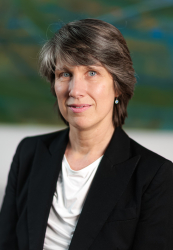
Members of the research center
Dr. habil. Virág Rab, PhD – PTE Faculty of Humanities (historian, associate professor)
Dr. habil. Ágnes Bálint, PhD – PTE Faculty of Humanities (psychologist, associate professor)
Ildikó Jenák – PTE Faculty of Technology and Economics (computer science / doctoral research in educational sciences, instructor)
Additional members: PhD students (Sára Czina, András Hegedüs, Bianka Somogyi, Tamás Loránd Zab), MA/BA students (Máté Mózer, Viktória Rédei, Bíborka Sára Tüske, Zsófia Velényi), who are participating in joint psychobiographical research.

Contact
+36 72 503 600/ 64127 or 64126
Pécsi Tudományegyetem | Kancellária | Informatikai és Innovációs Igazgatóság | Portál csoport - 2020.