
Research Team Generative Linguistics in Synchronic and Diachronic Language Description
A kutatóközpont neve angolul
Generatív Nyelvészet a Szinkrón és Diakrón Nyelvleírásban Kutatócsoport
The purpose of the research center
In general terms, we aim to gain a deeper understanding of the structure of the Hungarian language than before. We intend to achieve this partly by studying similar structures in certain Finno-Ugric languages, drawing heavily on the "comprehensive grammar" work of the past decade. Taking into account the evaluation of our NKFI project (funded by the National Research, Development and Innovation Office), which concluded this year, we aim to secure further funding. This would enable us to present our results at conferences and potentially to build collaborations with researchers working on similar questions, and also to support the development of the research group's members, especially young colleagues studying at doctoral schools across Hungary.
We also have two indirect goals. The senior members of the research group earned their PhDs and habilitations at the Doctoral School of Linguistics of the Faculty of Humanities and Social Sciences, University of Pécs (PTE BTK). Unfortunately, the Doctoral School closed in 2024 due to a lack of a sufficient number of core professor members. The research group aims to carry out work of a standard that will allow us to submit successful applications for professorships, and thus to establish a doctoral school that can once again award PhD degrees and habilitation titles in linguistics at the Faculty.
The other goal is to strengthen the accreditation basis of the Hungarian Language and Literature programme run by the Institute. This is urgently needed above all in historical linguistics, Finno-Ugric and Uralic studies, while of course not neglecting our tradition of formal syntactic analysis.
Head of Research Center
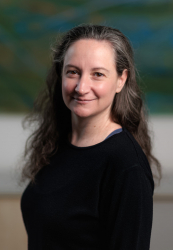
Members of the research center
A PTE BTK Nyelvtudományi Tanszék főállású oktatói közül:
- Dr. Alberti Gábor (az MTA doktora; tanszékvezető egyetemi tanár)
- Feltizi-Veress Saypasheva Anastasia (nyelvtanár)
- Huszics Aliz (tanársegéd)
- Kleiber Judit (egyetemi docens, PhD, habilitáció)
- Kocsis Eszter (tanársegéd)
- Prohászka Zsolt (tanársegéd)
- Viszket Anita (adjunktus, PhD)
A tanszék korábbi tagja, akivel továbbra is együtt dolgozunk:
- Szabó Veronika (PhD, Bécsi Egyetem)
A kutatócsoport témájához kapcsolódó TDK-tevékenységet végző PTE BTK-s hallgatók:
- Simon Nóra
- Takó Tünde
- Vida Krisztina
The most significant publications of the research center
Farkas Judit (2025): Formation of infinitives. In: Gábor Alberti & Péter Siptár (eds.): Syntax of Hungarian: Non-Finite Verb Phrases. Amsterdam: Amsterdam University Press. 3–116.
Farkas Judit & Alberti Gábor (2025): Internal syntax of infinitives. In: Gábor Alberti & Péter Siptár (eds.): Syntax of Hungarian: Non-Finite Verb Phrases. Amsterdam: Amsterdam University Press. 117–235.
Alberti Gábor (2025): External syntax of infinitives. In: Gábor Alberti & Péter Siptár (eds.): Syntax of Hungarian: Non-Finite Verb Phrases. Amsterdam: Amsterdam University Press. 236–268.
Prohászka Zsolt & Szabó Veronika (2025): Modal existential wh-constructions. In: Gábor Alberti & Péter Siptár (eds.): Syntax of Hungarian: Non-Finite Verb Phrases. Amsterdam: Amsterdam University Press. 269–294.
Farkas Judit & Alberti Gábor (2025): Participles. In: Gábor Alberti & Péter Siptár (eds.): Syntax of Hungarian: Non-Finite Verb Phrases. Amsterdam: Amsterdam University Press. 332–480.
Alberti Gábor & Farkas Judit (2025): Converbs. In: Gábor Alberti & Péter Siptár (eds.): Syntax of Hungarian: Non-Finite Verb Phrases. Amsterdam: Amsterdam University Press. 481–614.
Alberti Gábor & Farkas Judit (2021): Igei és hibrid szerkezetek Grohmann-ciklusai és tartományai a magyarban. In: Hegedűs Veronika (szerk.): Általános nyelvészeti tanulmányok XXXIII. Budapest: Akadémiai Kiadó. 13–42.
Farkas Judit, Szabó Veronika & Alberti Gábor (2021): Egy- és többértelműségek igéből képzett és közönséges főnevek csoportjaiban. In: Hegedűs Veronika (szerk.): Általános nyelvészeti tanulmányok XXXIII. Budapest: Akadémiai Kiadó. 125–148.
Alberti Gábor, Farkas Judit, Futó Bettina, Kleiber Judit & Huszics Aliz (2023): Az ’is’ és más additív kifejezések fókuszérzékenysége igei és igenévi szerkezetekben. In: Gyuris Beáta (szerk.): Általános Nyelvészeti Tanulmányok XXXV. Budapest: Akadémiai Kiadó. 51–86.
Alberti Gábor, Feltizi-Veress Saypasheva Anastasia, Ouma Linda Atieno & Farkas Judit (2024): A Givónian perspective on the relation of verbal and non-verbal person suffixes in Hungarian. Argumentum 20 (2024): 300–321.
Farkas Judit, Alberti Gábor, Kocsis Eszter & Dóla Mónika (2024): Teaching Hungarian to Chinese students based on generative syntactic analyses of Hungarian sentences in the area of infinitives. Aplikované jazyky v univerzitnom kontexte XI: 68–77.
Alberti Gábor & Farkas Judit (2022): Spelling out of scope taking arguments in(de-)verbal constructions in Hungarian. Linguistics Beyond and Within 8: 55–74.
Prohászka, Zsolt, Gábor Alberti, Anna Szeteli, & Judit Farkas (2022): Modal existential constructions in Hungarian. In: M. Janebová, J. Emonds, L. Veselovská (eds.): Language Use and Linguistic Structure: Proceedings of the Olomouc Linguistics Colloquium. Olomouc: Palacký University. 202–223.
External relations of the research center
Együttműködés a CGRH Non-Finite Verb-Phases kötetben: Szécsényi Krisztina (Bilbao), Szécsényi Tibor (SZTE).
Uralisztikai kutatásokban: Polina Neumann (University of Maryland) / Cooperation in CGRH Non Finite Verb Phrases: Krisztina Szécsényi (Bilbao), Tibor Szécsényi (SZTE).
In Uralic researches: Polina Neumann (University of Maryland).

Contact
+36 72 503 600/ 64127 or 64126
Pécsi Tudományegyetem | Kancellária | Informatikai és Innovációs Igazgatóság | Portál csoport - 2020.