
Reading Fluency and Comprehension Research Group
A kutatóközpont neve angolul
Olvasási Fluencia és Szövegértés Kutatócsoport
The purpose of the research center
The Reading Fluency and Reading Comprehension Research Group was established in 2022 in response to a call for proposals from the Public Education Development Research Programme of the Hungarian Academy of Sciences (MTA); our successful application made it possible to begin the research. The group's aim is to examine how reading fluency determines effective and successful reading comprehension in the Hungarian public education system.
Our work focuses on empirical research, methodological development and public outreach. We study the developmental trajectories of oral reading fluency, its relationship with reading comprehension, reading and comprehension strategies used in learning, and their language-specific features. We also analyse the beliefs and attitudes of teachers and students that shape classroom practice and learning outcomes. Through our research findings, we aim to help advance reading research in Hungary, renew educational practice, and modernise reading instruction and, more broadly, the education system. The research group has carried out studies in several areas in order to understand the theoretical and practical foundations of reading fluency and to make them more widely known.
Our work has been characterised by close cooperation with partners in Hungary and abroad, and by an effort to link research findings directly to classroom practice and teacher education. Particular attention has been paid to the study of oral reading fluency in Hungarian primary schools, especially to mapping the developmental trajectories of second- and third-grade students. We hope and believe that our results can contribute directly to the future development and modernisation of reading instruction and reading research in Hungary. Alongside empirical studies, the research group has placed great emphasis on disseminating its results and strengthening professional dialogue.
Our members have presented their research at Hungarian and international conferences, published in peer-reviewed journals, and taken part in professional debates on the renewal of reading instruction in Hungary. The research group has given particular support to young researchers and students: doctoral students, early-career researchers and university students have been and continue to be actively involved in our research. We consider it important to work as a collaborative workshop, where joint work gives us the opportunity to learn a great deal from one another.
Head of Research Center
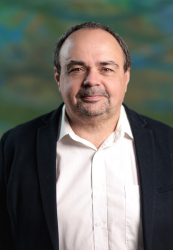
Members of the research center
Deputy Head of the Research Group: Prof. Dr. Judit Bóna, Professor, Eötvös Loránd University (ELTE), Faculty of Humanities (BTK), Institute of Hungarian Linguistics and Finno-Ugric Studies, Department of Applied Linguistics and Phonetics, Budapest
Research Methodology Advisor: Prof. Dr. Csaba Csíkos, University of Szeged, Institute of Educational Sciences, Szeged
Research Team:
- Dr. habil. Bálint Ágnes, egyetemi docens, Pécsi Tudományegyetem, BTK, Neveléstudományi Intézet, Nevelés- és Oktatáselméleti Tanszék, Pécs
- Dr. habil. Dezső Renáta, egyetemi docens, Pécsi Tudományegyetem, BTK, Neveléstudományi Intézet, Nevelés- és Oktatáselméleti Tanszék, Pécs
- Dr. habil. Mrázik Júlia, egyetemi docens, Pécsi Tudományegyetem, BTK, Neveléstudományi Intézet, Nevelés- és Oktatáselméleti Tanszék, Pécs
- Barabás Hanna, neveléstudomány, anglisztika szakos egyetemi hallgató, PTE-BTK
- Bogdán Patrik, PhD hallgató, Pécsi Tudományegyetem, BTK, Neveléstudományi Intézet, Nevelés- és Oktatáselméleti Tanszék, Pécs
- Dr. Bertalan Regina Frida, PhD, adjunktus, PTE KPVK, Pedagógiai és Pszichológiai Tanszék
- Dr. Demeter Gáborné PhD, egyetemi docens, Magyar Agrár- és Élettudományi Egyetem, Neveléstudományi Intézet, Kaposvár
- Fogarassy Nikolett, logopédus, gyógypedagógus, PhD hallgató, PTE, Neveléstudományi Doktori Iskola, Pécs
- Dr. Hoss Alexandra, PhD, adjunktus, Pécsi Tudományegyetem, BTK, Neveléstudományi Intézet, Nevelés- és Oktatáselméleti Tanszék, Pécs
- Dr. Huszár-Samu Nóra, PhD, adjunktus, Eötvös József Főiskola, Pedagógusképző Intézet, Baja
- Látics Barbara, PhD hallgató, Pécsi Tudományegyetem, BTK, Neveléstudományi Doktori Iskola, Pécs
- Geremew Deysmi Tamene, PhD hallgató, Pécsi Tudományegyetem, BTK, Neveléstudományi Doktori Iskola, Pécs
- Markó Éva, pedagógiai szakpszichológus, tanársegéd, PhD hallgató, Pécsi Tudományegyetem, BTK, Neveléstudományi Intézet, Nevelés- és Oktatáselméleti Tanszék, Pécs
- Nurul Fitriyah Almuanwaroh, PhD hallgató, Szegedi Tudományegyetem, Neveléstudományi Doktori Iskola, Szeged
- Dr. Sipos Zsóka PhD, főiskolai docens, logopédus, Apor Vilmos Katolikus Főiskola, Vác
- Szentmiklósi Beáta, mesteroktató, PhD hallgató, Pannon Egyetem, Neveléstudományi Intézet, Veszprém
- Dr. Varga Szilvia PhD, egyetemi docens, Neumann János Egyetem, Nyelvoktatási és Nyelvvizsgaközpont Kecskemét
- Linh Vuong Tuyet, PhD hallgató, Szegedi Tudományegyetem, Neveléstudományi Doktori Iskola, Szeged
- Dr. Volentér-Kis Orsolya PhD, logopédus, Szegedi Tudományegyetem Neurológiai Klinika
- Dr. Zank Ildikó PhD, adjunktus, Pécsi Tudományegyetem, BTK, Neveléstudományi Intézet, Nevelés- és Oktatáselméleti Tanszék, Pécs
Contact
+36 72 503 600/ 64127 or 64126
Pécsi Tudományegyetem | Kancellária | Informatikai és Innovációs Igazgatóság | Portál csoport - 2020.