
Popzenei Újságírás Kutatócsoport
A kutatóközpont neve angolul
Popular Music Journalism Research Group
The purpose of the research center
ince its emergence, pop music journalism has undergone countless changes. Alongside specialist papers striving for factual accuracy, glossy magazines appeared, and the press began to differentiate both by age group (teen and "adult" titles) and by pop music genre. Some journalists expanded the world of the pop music press towards cultural journalism, essay writing and interpretive criticism. From the turn of the millennium, the rise of online journalism and later the spread of social media brought about major changes. New developments emerged, such as the ability to follow events more quickly, shorter press reaction times, the blogosphere and, later, the appearance of influencers.
The case of Hungarian pop music journalism is an important question. At the time when rock and roll emerged in the Western world, official press policy in state-socialist Hungary portrayed beat music as decadent and pro-Western. Pop music journalism developed only slowly and with difficulty in Hungary. After the change of regime in 1989–90, however, there was a real boom in pop music publications, with the launch of VOLT, Metal Hammer, Freee, Rockinform, Z Magazin and Wanted, and, on the other hand, the Hungarian editions of the teen magazines Popcorn and Bravo.
Our research group aims at (1) a historical analysis of the endeavours, forums and discourses of Hungarian pop music journalism; (2) a media-sociological analysis of major moral panics and press scandals (such as the punk panic); (3) the reconstruction of typical career paths of pop music journalists in the state-socialist era; (4) the study of the press language of pop music writing as part of reception history; (5) placing certain trends in Hungarian pop music journalism in an international context; and (6) research into the history of rock and pop music press photography.
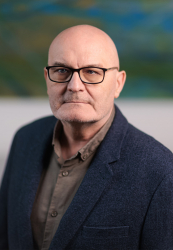
Head of Research Center
Members of the research center
- Róza Emília Barna, Ph.D., sociologist, associate professor Budapest University of Technology and Economics, Faculty of Economics and Social Sciences, Department of Sociology and Communication
- Márton Bagyura, Ph.D., sociologist, teaching assistant University of Pécs, Faculty of Humanities, Department of Communication and Media Studies
- Gábor Dobó, PhD, literary historian, museologist Kassák Museum, Hungarian National Museum of Fine Arts (MNMKP), Budapest
- Ádám Guld, PhD, media researcher, associate professor Department of Communication and Media Studies, Faculty of Humanities, University of Pécs (PTE)
- Ádám Ignácz, PhD, music historian Institute of Musicology, Faculty of Humanities, Eötvös Loránd University (ELTE), senior research fellow
- Zsolt K. Horváth, PhD, social historian, associate professor, Budapest Metropolitan University, Institute of Art and Design Theory
- Dániel Radnai, PhD, literary historian, research assistant, ELTE Faculty of Humanities, Institute of Literary Studies, 19th-Century Department (Budapest); Teaching Assistant, Institute of Linguistics and Literary Studies, NyE (Nyíregyháza)
- Tamás Tófalvy, PhD, media researcher, associate professor, Budapest University of Technology and Economics, Faculty of Economics and Social Sciences, Department of Sociology and Communication
- Zoltán Virág, PhD, literary historian, associate professor, University of Szeged, Faculty of Humanities and Social Sciences, Department of Modern Hungarian Literary History

Contact
+36 72 503 600/ 64127 or 64126
Pécsi Tudományegyetem | Kancellária | Informatikai és Innovációs Igazgatóság | Portál csoport - 2020.